

Getting a tattoo removed is not an overnight process. One of the most common questions people ask before starting is: how many laser tattoo removal sessions will I need to completely fade or remove my tattoo? The truth is, there is no universal answer. Every tattoo responds differently depending on ink type, depth, age, location, and your body’s natural ability to break down pigment.
At Winter Park Tattoo Removal, every treatment plan is customized after a detailed assessment so clients know exactly what to expect before starting. This guide explains realistic timelines, influencing factors, and what results you can expect from professional laser tattoo removal.
The Science Behind Tattoo Removal (Why Multiple Sessions Are Needed)
Laser tattoo removal works by targeting ink particles under the skin with highly concentrated light energy. The laser breaks the ink into tiny fragments, which are then gradually eliminated by your immune system. However, this process takes time because:
- Tattoo ink sits at different skin depths
- Some ink particles are too large to remove in one session
- The body clears ink gradually through lymphatic pathways
- Skin needs time to recover between treatments
This is why tattoo removal is always a multi-session process rather than a single treatment.
Realistic Session Estimates for Tattoo Removal
While every case is different, clinical experience shows general patterns for most tattoos:
- Light or amateur tattoos: 3–6 sessions
- Standard professional tattoos: 6–12 sessions
- Large, dense, or multi-colored tattoos: 10–15+ sessions
You will typically begin seeing visible fading after the first 2–3 sessions, but full clearance requires consistency and patience. The more complex the tattoo, the longer the process will take.
What Determines Your Total Number of Sessions?
Several key factors influence how quickly or slowly your tattoo fades. Understanding these helps set realistic expectations from the start.
Ink Depth and Application Style
How deeply the tattoo was applied plays a major role in removal speed.
- Light or amateur tattoos → easier to break down
- Professionally done tattoos → deeper, more stable ink deposits
- Heavily layered tattoos → require more sessions
The deeper the ink, the more energy is needed to break it apart.
Color Complexity of the Tattoo
Different ink colors respond differently to laser wavelengths:
- Black & dark blue: respond best and fade fastest
- Red, orange, purple: moderate difficulty
- Green, yellow, light blue: more resistant and slower to fade
Multi-colored tattoos almost always require more sessions than single-color designs.
See the ink colour section below for a closer look at how each colour group affects your session count.
Age of the Tattoo
Time naturally helps break down ink particles, which can make older tattoos easier to remove.
- Older tattoos → faster fading
- Recent tattoos → more resistant pigment structure
If your tattoo is several years old, you may need fewer sessions compared to a fresh design.
Size, Detail, and Ink Density
The structure of your tattoo significantly impacts removal time.
- Small, simple tattoos → fewer sessions
- Large tattoos (sleeves, back pieces) → extended treatment plans
- Heavy shading or solid fills → slower breakdown
Dense ink requires more laser passes over multiple sessions.
Body Location and Circulation
Blood flow and lymphatic activity affect how efficiently ink is removed.
Faster-healing areas:
- Upper arms
- Chest
- Upper back
Slower-healing areas:
- Hands
- Feet
- Ankles
- Lower legs
Areas with lower circulation typically require additional sessions.
Individual Skin Response and Health Factors
Every person’s body processes ink differently. Factors include:
- Immune system strength
- Lifestyle habits (smoking can slow results)
- Skin type and sensitivity
- Hydration levels
- Overall health condition
A healthy immune system supports faster ink clearance between sessions.
Technology and Laser Type Used
Modern laser systems significantly reduce the number of sessions required. Advanced systems like picosecond and Q-switched lasers:
- Break ink into finer particles
- Target a wider range of colors
- Reduce treatment time per session
- Improve overall fading efficiency
At Winter Park Tattoo Removal, advanced laser technology is used to maximize results while minimizing skin damage.
How Many Sessions Does It Take to Remove Different Tattoo Ink Colors?
Tattoo ink comes in a diverse spectrum of colors, each with its unique chemical composition. These tattoo ink colors can broadly be categorized into three groups: dark, medium, and light.
Dark Ink Colors
Dark ink colors, including black and dark blue, are known for their intensity and depth. They tend to absorb more laser energy during removal, making them comparatively easier to target. However, even with dark ink, the number of sessions required depends on various factors.
Medium Ink Colors
Medium ink colors, such as green and purple, occupy a middle ground in terms of removal difficulty. They can be effectively removed with laser treatments, but the process may require a moderate number of sessions.
Light Ink Colors
Light ink colors, including pastels and flesh tones, are often the most challenging to remove. They reflect laser energy rather than absorbing it, which can prolong the removal process. Light colors may require more sessions for complete fading.
Ink Color Removal Time: A General Guide
While each tattoo removal journey is unique, here’s a general guide on the expected number of sessions for different ink colors:
- Dark Ink Colors: On average, it may take 5-10 sessions to remove or significantly fade dark ink tattoos.
- Medium Ink Colors: Medium ink colors typically require 6-12 sessions for effective removal or fading.
- Light Ink Colors: Light ink colors are the most challenging and may take 8-15 sessions or more for satisfactory results.
How Long the Full Process Takes: Time Between Sessions
Session count is only one part of the timeline. Spacing between treatments is equally important. Most clients follow a schedule of:
- 6 to 8 weeks between sessions
This allows:
- Proper skin healing
- Immune system to clear ink particles
- Reduced risk of irritation or scarring
The exact spacing depends on the treatment plan your specialist recommends, as your skin needs time to heal properly between sessions for the best results.
Even a 10-session plan can take 12–18 months or longer to complete. Tattoo removal is a gradual transformation, not a quick procedure.
Fading Goals vs Complete Tattoo Removal
Not everyone wants total removal. Many clients only want partial fading for a cover-up tattoo. Typical treatment goals:
- Cover-up preparation: 2–6 sessions
- Significant fading: 5–8 sessions
- Full removal: 8–12+ sessions
Cover-up cases usually require fewer sessions since the goal is to lighten the tattoo rather than eliminate it completely.
Can You Improve or Speed Up Results?
While your body controls the pace of ink removal, certain habits can support better outcomes: Helpful practices include:
- Staying well hydrated
- Avoiding smoking and excessive alcohol
- Following aftercare instructions carefully
- Maintaining a healthy immune system
- Attending sessions consistently
What you should avoid:
- Skipping sessions for long periods
- Picking or scratching healing skin
- Overexposing treated areas to sunlight
Consistency plays a major role in achieving faster results.
What Happens After Each Laser Session?
It’s important to understand what normal healing looks like so you know what to expect. After treatment, you may experience:
- Redness and warmth in the treated area
- Mild swelling
- Temporary darkening of ink
- Light blistering or scabbing in some cases
Over the following weeks, the ink gradually fades as your body processes the broken pigment particles. Noticeable fading typically becomes more visible after multiple sessions.
Is Tattoo Removal Truly Permanent?
Yes, laser tattoo removal is considered permanent once ink particles are fully eliminated from the body. However, final outcomes depend on:
- Total number of sessions completed
- Laser technology used
- Tattoo characteristics
- Individual healing response
In many cases, tattoos can be completely removed. In others, they may fade to the point of being barely noticeable.
The Importance of Consultation
Before embarking on your tattoo removal journey, it’s crucial to consult with a qualified tattoo removal specialist. They will assess your tattoo’s specific characteristics and develop a personalized removal plan tailored to your needs. An expert’s guidance ensures a more accurate estimation of the number of sessions required and a better understanding of what to expect throughout the process.
Why Choosing the Right Clinic Matters
The quality of your results depends heavily on where you get treated. At Winter Park Tattoo Removal, clients benefit from:
- Detailed consultation and skin analysis
- Customized treatment planning
- Advanced laser systems for safe removal
- Controlled energy settings for different skin types
- Reduced risk of scarring and pigmentation changes
Professional expertise ensures safer treatment and more predictable results.
Final Summary
So, how many sessions does laser tattoo removal take? For most individuals, the answer ranges between 6 and 12 sessions, though some tattoos require fewer and others require more depending on complexity. Tattoo removal is a gradual process influenced by ink type, skin response, tattoo age, and technology used but with proper care and a professional treatment plan, excellent fading or full removal is achievable. If you’re considering starting your tattoo removal journey, the best first step is a professional consultation to evaluate your tattoo and create a realistic plan tailored to your skin and goals.
At Winter Park Tattoo Removal, our experienced specialists are committed to helping you achieve your tattoo removal goals safely and effectively. Contact us today to take the first step toward the transformation you desire. Your tattoo’s future is in your hands, and we’re here to guide you every step of the way.
Frequently Asked Questions (FAQs)
1. Can all tattoos be completely removed?
Most tattoos can be significantly faded or fully removed with laser treatment. However, results depend on ink color, depth, age, and your skin’s response. Some stubborn pigments may leave very faint traces even after full treatment.
2. Why do I need multiple laser tattoo removal sessions?
Tattoo ink is broken into tiny particles during each session, but your body can only remove a limited amount at a time. Multiple sessions are needed to gradually clear all ink safely without damaging the skin.
3. How soon will I see results after starting treatment?
Most clients notice visible fading after 2–3 sessions. However, full results develop gradually over several months as the body continues clearing fragmented ink between treatments.
4. What happens if I miss or delay a session?
Delaying sessions slows down your overall progress. While it won’t undo previous results, it can extend your total treatment time because your body needs consistent stimulation to remove ink efficiently.
5. Is laser tattoo removal painful and are there side effects?
Most clients describe the sensation as similar to a rubber band snap. Temporary redness, swelling, or light scabbing can occur, but these effects usually heal within a few days when proper aftercare is followed.
6. How often should I schedule tattoo removal sessions?
Sessions are typically spaced 6 to 8 weeks apart. Your specialist will set the exact schedule in your treatment plan so your skin can heal properly and your body has time to clear the broken-down ink between treatments.
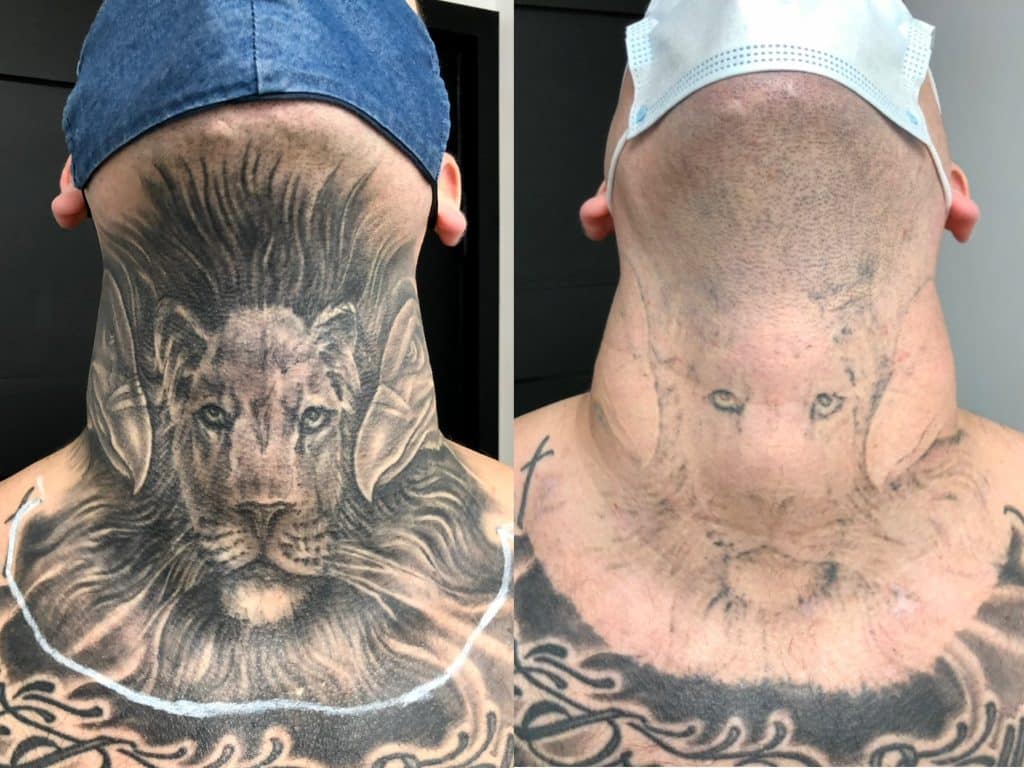
7. Can I see tattoo removal before and after results?
Yes. You can view before and after photos from our clinic to get an idea of the fading you can expect over a series of sessions.