
Scar Laser Treatment
Advanced Clinical Guide to Scar Laser Treatment in Orlando: Precision Skin Rejuvenation
Your skin is a historical map of your life chronicling childhood mishaps, athletic pursuits, surgical milestones, and adolescent acne battles. While these marks represent your journey, you should not be burdened by the permanent visual remnants of past trauma. When a scar impacts your self-esteem, dictates your wardrobe choices, or diminishes your daily confidence, advanced medical aesthetics offers a transformative clinical solution.
At Winter Park Tattoo Removal, we recognize that optimal dermatological care extends far beyond surface improvements; it requires restoring physiological integrity and patient self-assurance. As a skin rejuvenation provider in the Greater Orlando area, our clinic merges state-of-the-art laser technology, physician-led oversight, and an unwavering commitment to clinical safety and efficacy. If you are researching Scar Laser Treatment Orlando, this comprehensive guide examines the physiological mechanisms of laser scar revision, classifies treatable scar typologies, outlines clinical protocols, and details why provider selection dictates clinical outcomes.
Contact Us Today!

Dermatological Pathology: The Physiology of Scar Formation
When trauma breaches the dermis the thick, fibrous underlying layer of the skin the body initiates an emergency wound-repair cascade. The primary objective of this biological response is rapid structural closure rather than aesthetic perfection. To bridge the defect, fibroblasts secrete collagen, a dense structural protein that knits the tissue back together. The aesthetic outcome of this process depends on the volume, organization, and turnover rate of the newly synthesized collagen matrix:
- Atrophic Scars (Depressed Lesions): Resulting predominantly from severe inflammatory acne (e.g., icepick, boxcar, and rolling configurations) or varicella (chickenpox) infections. These occur when localized tissue destruction outpaces collagen synthesis, leaving pitted, sunken topography.
- Hypertrophic Scars: Raised, erythematous, firm lesions characterized by an overproduction of collagen. Crucially, these scars remain confined within the precise anatomical boundaries of the original wound.
- Keloids: Aggressive, fibrous proliferations characterized by excessive collagen synthesis that extends beyond the original injury margins. These lesions can be pruritic, painful, and resistant to standard modalities, requiring specialized dermatological intervention.
- Contracture Scars: Typically resulting from extensive thermal burns, these scars undergo severe fibrous contraction, pulling the surrounding skin tight and potentially restricting joint and muscle mobility.
While over-the-counter topical emollients, silicone sheets, and home remedies can improve epidermal hydration, they possess insufficient molecular penetration to remodel deeply entrenched dermal scar architecture. True structural correction demands energy-based medical devices.
The Mechanisms of Action: How Laser Scar Revision Works
Laser scar mitigation is an advanced dermatological intervention utilizing targeted light wavelengths to thermally and photomechanically remodel pathological collagen. Depending on the clinical modality selected, the laser functions via specific biological pathways:
- Ablative Resurfacing: Vaporizes microscopic layers of scarred epidermis and superficial dermis with high-precision wavelengths, forcing the skin to shed damaged architecture and regenerate a smooth surface layer.
- Non-Ablative Fractional Remodeling: Delivers precise micro-beams of thermal energy deep into the reticular dermis while leaving the stratum corneum intact. This controlled thermal injury (microthermal treatment zones) initiates a wound-healing cascade, prompting fibroblasts to synthesize and organize fresh, high-quality collagen and elastin.
As neocollagenesis occurs, depressed atrophic scars are structurally elevated from beneath, raised hypertrophic textures are softened, dyschromia is blended, and overall skin architecture is normalized. Importantly, laser remodeling remains clinically effective even years or decades after initial scar maturation.
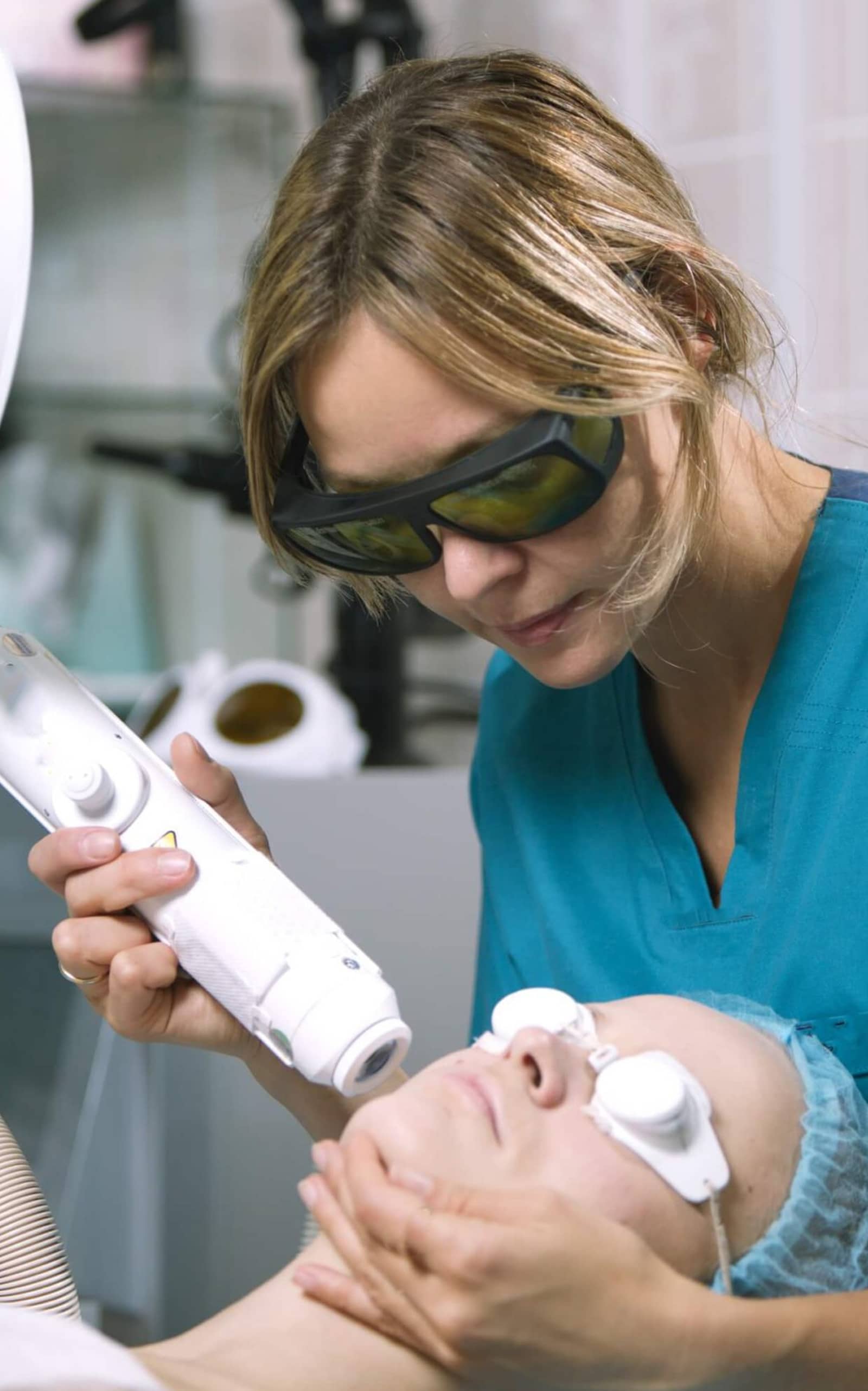

Clinical Modalities: Tailored Protocols at Winter Park Tattoo Removal
Dermatological aesthetics is not a monolithic discipline; individual skin phototypes, scar depths, and anatomical locations necessitate bespoke treatment planning. Prior to initiating any protocol, our clinical team conducts a comprehensive diagnostic evaluation. We deploy industry-leading technologies to address diverse scar presentations:
1. Fractional Laser Resurfacing
Fractional technology delivers thousands of microscopic treatment columns into the skin while preserving intact bridges of surrounding tissue. This zonal approach accelerates re-epithelialization and minimizes downtime while safely tightening structural collagen, smoothing pitted acne scars, and refining surgical incision lines.
2. CO2 Laser Resurfacing
For advanced, recalcitrant, or deep-seated scarring, carbon dioxide (CO2) laser systems provide profound ablative resurfacing. By systematically removing damaged tissue layers and instigating deep dermal tightening, CO2 therapy delivers dramatic transformations. Due to the depth of this modality, our physician-led protocols include meticulous post-procedural care management to ensure optimal healing.
3. Adjunctive Innovations: PFD Patches
To optimize clinical endpoints and streamline recovery, our facility integrates advanced adjunct technologies such as PFD (Perfluorodecalin) optical clearing patches. These specialized matrices enhance optical coupling during laser delivery, yielding distinct clinical advantages:
- Reduction in the total number of required treatment sessions
- Decreased thermal discomfort during the procedure
- Accelerated re-epithelialization and minimized post-inflammatory erythema
The Clinical Journey: What to Expect
Navigating a medical-grade skin transformation requires clinical transparency. Our patient journey is structured around safety, comfort, and predictable outcomes:
Step 1: Comprehensive Consultation
Your protocol begins with an in-depth, complimentary consultation. We assess your skin phototype (Fitzpatrick scale), review your medical history, evaluate scar vascularity and depth, and establish realistic clinical benchmarks.
Step 2: The Treatment Session
On the day of your session, our licensed medical professionals ensure optimal comfort. The procedure duration varies based on the surface area treated. While patients may experience a rapid thermal sensation, advanced integrated cooling mechanisms mitigate discomfort effectively.
Step 3: Immediate Post-Procedural Management
Following the session, the treatment area may be dressed to protect the compromised epidermal barrier during the initial 24 hours. Maintaining strict sterility is paramount to prevent secondary microbial colonization.
Step 4: The Recovery and Remodeling Phase
Depending on whether fractional or full ablative modalities are utilized, initial re-epithelialization typically spans 5 to 21 days. Transient erythema and localized edema are expected physiological responses resembling a deep sunburn. To safeguard the healing matrix, our specialists provide an explicit post-care regimen:
- Application of medical-grade barrier protectants and prescribed topicals (such as Silvadene Rx) during the initial healing window
- Integration of specialized healing balms and broad-spectrum physical barriers, such as Skin Better Science Advanced Mineral Protection
- Strict avoidance of ultraviolet radiation to prevent post-inflammatory hyperpigmentation (PIH)


Why Choose Winter Park Tattoo Removal
Achieving predictable, aesthetically superior outcomes requires clinical expertise and institutional rigor. Patients across Orlando, Winter Park, and the surrounding regions select our clinic based on several foundational pillars:
- Demonstrated Excellence: Our reputation is built on hundreds of verified 5-star patient reviews and a legacy of clinical distinction in Central Florida.
- Physician-Led Oversight: Patient safety is paramount. All treatments are performed or directly supervised by highly qualified medical professionals possessing advanced training in dermatological laser physics.
- Advanced Technology Investment: We maintain a continuous acquisition model for elite laser platforms and adjunct recovery tools, ensuring our patients receive evidence-based care.
- Inclusive Protocols: Our laser parameters are meticulously calibrated to accommodate diverse skin phototypes safely, ensuring equitable, high-level care across broad demographics.
Comprehensive Aesthetic Solutions
Beyond scar revision, our clinical scope encompasses specialized dermatological laser applications designed to resolve complex skin irregularities:
- Advanced Laser Tattoo Removal: Precision photomechanical fragmentation of multi-colored ink particles across all Fitzpatrick skin types.
- Microblading and Cosmetic Tattoo Correction: Controlled fading or complete clearance of unwanted facial pigments.
- Scalp Micropigmentation (SMP) Correction: Specialized laser remediation for uneven or migrated scalp camouflage ink.

Frequently Asked Questions
How does scar laser treatment actually work beneath the surface?
Lasers use concentrated light energy to vaporize damaged tissue or deliver deep thermal heat. This breaks down rigid scar fibers and triggers fibroblasts to synthesize fresh, properly aligned collagen and elastin.
Can all types of scars be treated with lasers?
Most atrophic acne scars, hypertrophic scars, and surgical marks respond very well. Active keloids require a cautious, multimodal approach (often combining lasers with steroid injections) to prevent recurrence.
How many treatment sessions will I need to see significant improvement?
Most patients require a series of 3 to 6 sessions spaced 4 to 6 weeks apart, depending on the scar's depth and age, to allow proper collagen remodeling.
Is scar laser treatment painful?
Most patients feel a sensation similar to a snapping rubber band. Integrated cooling devices and topical anesthetics are used to keep discomfort minimal.
5.
What should I expect during the recovery and healing window?
Expect mild redness and swelling similar to a sunburn. Healing takes anywhere from 3 to 7 days for fractional treatments, or up to 21 days for deeper ablative resurfacing.
Will laser treatment completely erase my scar?
Complete erasure is rare, but treatments drastically improve texture, depth, and color, making the scar blend seamlessly with surrounding skin and virtually unnoticeable.
Is scar laser treatment safe for darker skin tones?
Yes, when performed by experienced professionals using properly calibrated parameters to avoid post-inflammatory hyperpigmentation.
What are PFD patches, and how do they enhance my results?
PFD (Perfluorodecalin) patches are optical clearing matrices that improve laser light delivery, helping reduce total session numbers, minimize discomfort, and speed up healing.
Can I undergo laser treatment on old scars, or does it only work on new ones?
Lasers are highly effective on old, mature scars even decades after formation by breaking down stubborn, rigid collagen architecture.
How do I get started with scar treatment at Winter Park Tattoo Removal?
Schedule a complimentary, no-obligation consultation on our website or by phone so our clinical team can evaluate your skin and build a custom treatment plan.
We also treat burn scars and welcome scar laser patients from Altamonte Springs, Baldwin Park, College Park, Fairview Shores, Maitland and Oviedo.