

The decision to remove a tattoo is a significant commitment not just to the process of clearing your skin, but to the health and vitality of your dermis. At Winter Park Tattoo Removal, we view the removal process as a partnership. While our state-of-the-art laser technology provides the clinical precision needed to break down stubborn ink, your role in the aftercare process is the decisive factor in how quickly and effectively your skin recovers. Many clients focus entirely on the session itself, but the reality is that the true “transformation” occurs in the weeks following your appointment. During this time, your body is working tirelessly to process shattered ink fragments while simultaneously repairing the micro-injuries created by the laser.
This comprehensive guide is designed to provide you with a professional, science-backed framework for post-treatment care. By following these protocols, you will not only accelerate your healing time but also protect your skin from common complications such as scarring, textural changes, and pigmentation issues.
The Physiology of Healing: Understanding the Process
To appreciate why aftercare is so rigorous, you must understand what occurs beneath the surface of your skin during a treatment session. When the laser pulse hits your skin, it targets the ink pigment, heating it rapidly and shattering it into microscopic particles. This process is highly effective, but it creates a controlled, therapeutic injury. Your body perceives this as a reason to initiate its natural healing cascade.
The Three Stages of Recovery
-
The Inflammatory Phase (Days 1–3): Immediately following treatment, your body sends white blood cells to the area to begin “cleaning up” the shattered ink. This manifests as redness, warmth, and swelling. It is completely normal to see blistering during this stage; think of a blister as a biological bandage that your body creates to protect the healing dermis underneath.
-
The Proliferative Phase (Days 4–10): As inflammation subsides, your body begins to generate new skin cells and re-establish the skin barrier. You may notice scabbing or crusting. These are critical structures that should never be removed prematurely, as they act as a scaffold for healthy skin regeneration.
-
The Remodeling Phase (Weeks 2–8): The surface of the skin typically appears healed within a few weeks, but the deeper layers are still actively flushing out ink particles. This is the period where patience is paramount. Even if the skin looks “normal,” the immune system is still performing heavy lifting in the background.
Professional Protocols for Accelerated Healing
At Winter Park Tattoo Removal, we have developed a set of “Golden Rules” to ensure our clients experience the most efficient recovery possible.
Maintaining a Sterile Barrier
For the first 48 hours post-treatment, your skin is vulnerable. Bacteria thrive in moisture, which is why we emphasize keeping the area dry.
-
Avoid Submersion: Steer clear of swimming pools, hot tubs, saunas, and prolonged bathing for at least 48 hours. The chemicals in pool water, or the bacteria common in warm, stagnant water, can easily irritate open skin and lead to infection.
-
Hygiene: If the area must be washed, use a gentle, fragrance-free cleanser and pat—never rub—the area dry with a sterile, disposable paper towel.
Strategic Discomfort Management
It is common to feel a sensation similar to a mild sunburn.
-
Thermal Regulation: A cold compress can provide significant relief. Ensure the compress is wrapped in a clean, soft cloth and never apply ice directly to the treated skin. Apply it in short, 10–15 minute intervals.
-
Medication Strategy: We recommend Tylenol (acetaminophen) for discomfort. Crucially, avoid anti-inflammatory medications like Aspirin, Ibuprofen, or Naproxen for the first 24–48 hours. These medications inhibit the inflammatory response, which is a necessary part of your body’s initial healing and immune activation.
Targeted Topical Care
Do not “over-treat” your skin with excessive products. We typically recommend a thin layer of a medical-grade healing ointment or a specialized laser aftercare balm.
-
Breathability: The skin needs oxygen to repair itself. A thick layer of heavy ointment can trap heat and block pores, potentially leading to contact dermatitis or acneiform eruptions. Apply only a sheer, protective layer as directed.
The Role of Lifestyle in Skin Health
Your internal environment is just as important as the external care you provide. The speed at which your body clears ink is directly proportional to the efficiency of your immune and lymphatic systems.
Hydration and Lymphatic Drainage
The lymphatic system is the “waste management” department of your body. Once the laser shatters the ink, your lymphatic system must transport those particles to the lymph nodes to be processed and eventually excreted.
-
The 3-Liter Goal: Aim for at least 2–3 liters of water per day. Proper hydration keeps the lymphatic fluid flowing, which can tangibly reduce the number of sessions required by ensuring ink is cleared away as quickly as possible.
Nutrition for Tissue Repair
Your skin is an organ that requires specific nutrients to rebuild.
- Vitamin C: Essential for collagen production. A diet rich in citrus, bell peppers, and strawberries supports the structural integrity of your skin during the remodeling phase.
- Zinc: A powerhouse mineral for wound healing. Consider including lean meats, seeds, and legumes in your post-treatment diet.
- Antioxidants: Foods like blueberries, dark chocolate, and leafy greens help combat systemic inflammation, allowing your body to focus its energy on the localized repair of the treated area.
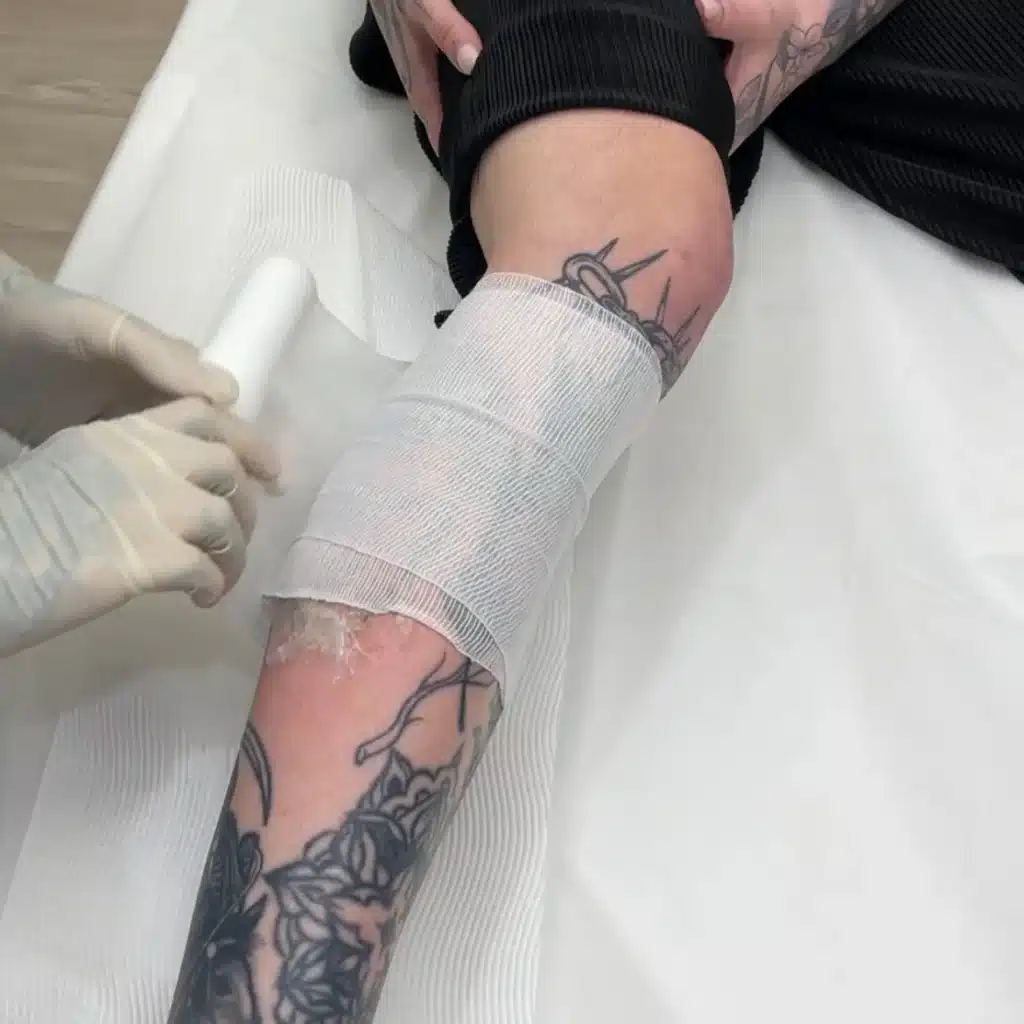
The “Do Not” List: Protecting Your Investment
In the world of laser tattoo removal, what you don’t do is often as important as what you do. Avoiding these common mistakes is the best way to prevent scarring.
The No-Pick Policy
This cannot be overstated: Never pick, peel, or scratch the treated area. Whether you have a blister, a scab, or flaky skin, it is there for a reason. If you remove a scab before it is ready to detach, you are interrupting the healing of the dermis, which creates a high probability of scarring or permanent texture changes. Let your body heal on its own schedule.
Shielding Against UV Radiation
UV rays are the natural enemy of healing skin. Exposure to the sun during the recovery window can cause permanent hyperpigmentation (darkening of the skin) or hypopigmentation (whitening of the skin), as your melanocytes are sensitized by the laser treatment.
-
The Protocol: Keep the area covered with UV-protective clothing. Once the skin is fully re-epithelialized (the surface is completely intact), apply a high-quality, broad-spectrum SPF 30+ every single day.
Avoiding Thermal and Physical Stress
Intense exercise that leads to heavy sweating can be detrimental in the first 48 hours. Salt and bacteria from sweat can settle into the pores of the treated area, causing irritation or even infection. Additionally, avoid saunas, hot yoga, or direct heat sources until the initial inflammatory phase has passed.
Chemical Irritants
Your skin will be hypersensitive post-treatment. Avoid all harsh chemicals, including:
- Exfoliating scrubs or brushes.
- Alpha-Hydroxy Acids (AHAs) and Beta-Hydroxy Acids (BHAs).
- Retinoids or Retin-A products.
- Heavily scented lotions or perfumes.
Patience and the Science of Treatment Intervals
One of the most frequent misconceptions in tattoo removal is the belief that more frequent sessions lead to faster results. In reality, the opposite is true. At Winter Park Tattoo Removal, we strictly adhere to a 6 to 8-week interval between sessions. This is not arbitrary; it is a clinical necessity based on how the body handles ink pigment.
Why We Wait
- Immune Processing: The laser only does the job of shattering the ink. The immune system must then spend weeks actually removing those particles. If you come in for a second session too soon, you are simply adding more ink to a system that is already overwhelmed.
- Dermal Recovery: Your skin needs time to fully heal and remodel the extracellular matrix. Treating before the skin has fully recovered increases the risk of thermal damage to the surrounding healthy tissue.
By spacing out your treatments, you are giving your immune system the time it needs to work at maximum capacity, which ultimately leads to a cleaner, faster, and more affordable end result.
The Winter Park Advantage: Why Expertise Matters
Not all laser removal is created equal. The difference between a smooth, successful removal and a complicated one often comes down to the expertise of the provider and the quality of the technology.
Clinical Precision
We utilize advanced laser technology that allows us to precisely target specific ink colors and depths. By calibrating the laser based on your skin tone and the age of your tattoo, we minimize collateral damage to the surrounding healthy skin.
Personalized Guidance
No two tattoos are the same, and no two skin types respond exactly the same way. When you work with us at Winter Park Tattoo Removal, you aren’t just a patient you are a partner in a personalized treatment plan. We provide custom aftercare instructions that take into account your skin sensitivity, your lifestyle, and your specific tattoo characteristics.
A Culture of Safety
We pride ourselves on an uncompromising commitment to skin integrity. We would rather see you heal perfectly than rush a session. Our philosophy is simple: we provide modern laser technology and clear aftercare advice, and we empower you with the knowledge to maintain your skin health throughout the entire process.
Starting Your Transformation: What to Expect Next
If you are considering laser tattoo removal, your first step is a comprehensive consultation. During this visit, we will assess your tattoo, discuss your goals, and provide you with a realistic timeline for your removal journey. We believe that transparency is the foundation of a good client relationship. We will discuss exactly what the procedure entails, the expected sensations, and how to prepare your skin for the best possible outcome.
Frequently Asked Questions
-
Will I have a scar? When performed correctly on healthy skin, the risk of scarring is extremely low. Following our aftercare instructions is the primary way to ensure your skin remains smooth and scar-free.
-
Does it hurt? Most clients describe the sensation as a rubber band snap, similar to the sensation of getting the tattoo in the first place, though the process is much faster.
-
Can I remove only a part of a tattoo? Yes. Our lasers are precise enough to target specific areas, allowing for selective fading or partial removal.
Conclusion: Investing in Your Skin’s Future
The process of laser tattoo removal is a journey of reclaiming your skin. It is a commitment to yourself, and we are here to ensure that journey is as seamless and successful as possible. By prioritizing your aftercare, maintaining a healthy lifestyle, and allowing your body the necessary time to heal between sessions, you are setting yourself up for the best possible outcome. At Winter Park Tattoo Removal, we are dedicated to providing the highest standard of care in a comfortable, professional environment. Your unwanted ink doesn’t have to be a permanent part of your story. With the right technology and the right guidance, you can clear the path for the version of yourself you want to show the world.
Are you ready to begin? Contact Winter Park Tattoo Removal today to schedule your consultation. Let’s create a plan that respects your skin and achieves the results you deserve.