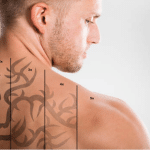
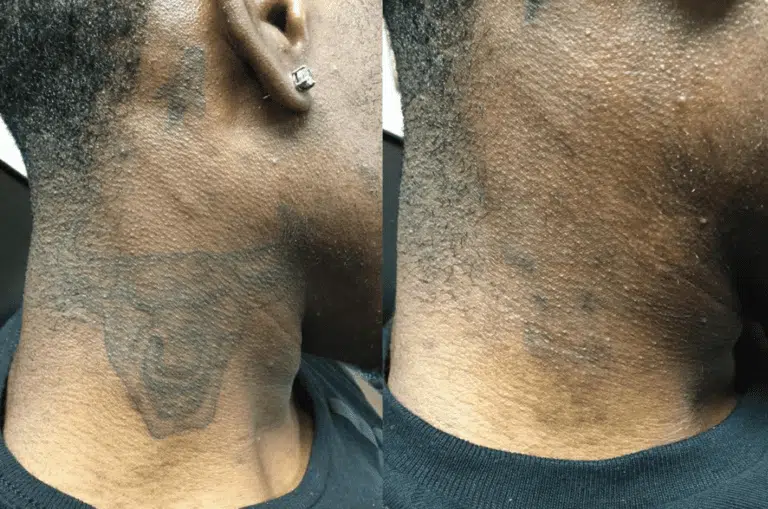
Tattoos are a form of self-expression, but personal preferences, career goals, lifestyle changes, or evolving aesthetics often lead people to consider tattoo removal. For individuals with Fitzpatrick skin types IV, V, and VI, tattoo removal requires a specialized approach that prioritizes both effective ink removal and the preservation of natural skin pigmentation.
Historically, laser tattoo removal presented greater challenges for darker skin tones due to the higher concentration of melanin in the skin. However, advancements in laser technology and treatment protocols have made it possible to safely and successfully remove tattoos from melanin-rich skin when performed by experienced professionals. At Winter Park Tattoo Removal, we understand the unique needs of patients with darker skin tones. Our customized treatment plans are designed to minimize risks, protect your natural complexion, and help you achieve the best possible tattoo removal results.
Understanding Fitzpatrick Skin Types IV–VI
The Fitzpatrick Skin Type Scale is a widely used classification system that categorizes skin based on pigmentation and its reaction to sun exposure.
1: Fitzpatrick Skin Type IV
- Olive or light brown complexion
- Rarely burns
- Tans easily and deeply
2: Fitzpatrick Skin Type V
- Medium to dark brown complexion
- Very rarely burns
- Produces significant melanin
3: Fitzpatrick Skin Type VI
- Deeply pigmented dark brown to black complexion
- Never burns
- Contains the highest concentration of melanin
While these skin types offer natural protection against UV damage, the increased melanin content requires greater precision during laser tattoo removal treatments.
Why Darker Skin Requires a Specialized Tattoo Removal Approach
Laser tattoo removal works by delivering concentrated light energy into the skin. The laser targets tattoo ink particles, breaking them into tiny fragments that are gradually eliminated through the body’s natural immune processes. However, laser energy can also be absorbed by melanin. Since Fitzpatrick skin types IV–VI contain higher levels of melanin, treatment must be carefully calibrated to avoid unnecessary damage to surrounding skin. Without proper laser settings, patients may face complications such as:
- Hyperpigmentation
- Hypopigmentation
- Prolonged inflammation
- Skin texture irregularities
- Increased healing time
This is why choosing a provider experienced in treating darker skin tones is essential for achieving safe and successful results.
The Relationship Between Melanin and Laser Energy
Melanin acts as the skin’s natural pigment and absorbs light energy. During tattoo removal, the goal is to direct laser energy toward tattoo ink rather than the skin itself. For individuals with darker complexions, this balance becomes especially important. An experienced practitioner must carefully adjust:
- Laser wavelength
- Energy levels
- Spot size
- Pulse duration
- Treatment intervals
These adjustments help maximize ink removal while minimizing stress on the surrounding skin.
Advanced Laser Technology for Fitzpatrick Skin Types IV–VI
Not all tattoo removal lasers are equally suitable for darker skin tones. Selecting the correct wavelength is one of the most important factors in achieving safe treatment outcomes.
Why the 1064nm Nd:YAG Wavelength Is Preferred
The 1064nm Nd:YAG wavelength is widely regarded as one of the safest and most effective options for patients with Fitzpatrick skin types IV–VI. This wavelength offers several advantages:
- Penetrates deeper into the skin
- Bypasses much of the epidermal melanin
- Targets black and dark-colored tattoo pigments effectively
- Reduces the risk of pigmentation complications
- Minimizes damage to surrounding healthy tissue
Because of these characteristics, it is often considered the preferred wavelength for treating melanin-rich skin safely.
Customized Treatment Planning for Darker Skin Tones
No two tattoos are alike, and no two patients heal in exactly the same way. Successful tattoo removal requires an individualized treatment plan based on several factors. During your consultation, our specialists evaluate:
Skin Characteristics
- Fitzpatrick skin classification
- Pigmentation patterns
- Sensitivity levels
Tattoo Details
- Tattoo size
- Ink density
- Ink colors
- Tattoo age
- Professional versus amateur application
Medical Considerations
- Previous skin conditions
- History of pigmentation issues
- Overall health and healing capacity
This information helps create a treatment strategy that balances effectiveness with safety.
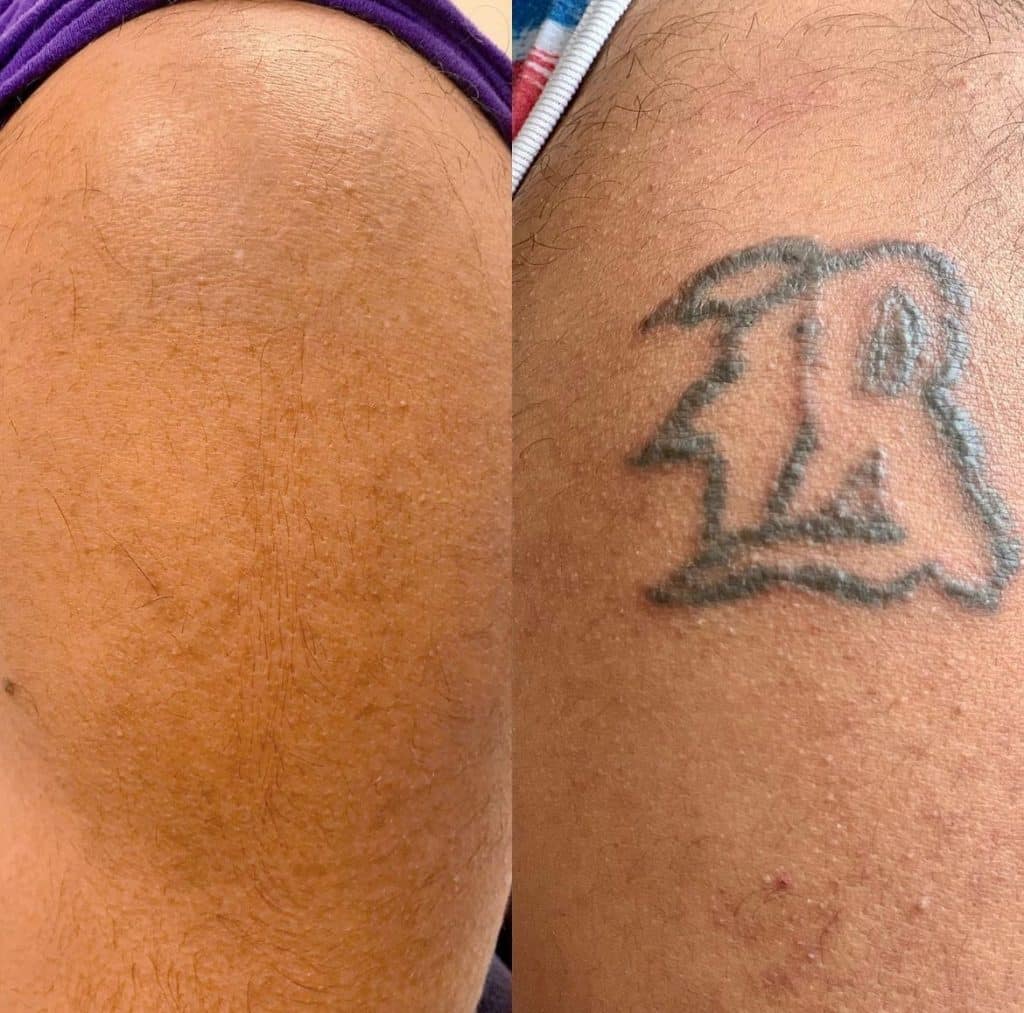
Common Tattoo Colors and Their Removal Challenges
Different tattoo pigments respond differently to laser treatment.
- Black Ink: Black ink typically responds the best to laser tattoo removal because it absorbs laser energy efficiently.
- Blue Ink: Dark blue pigments generally respond well and often fade significantly over multiple sessions.
- Red Ink: Red pigments can often be treated successfully but may require specialized settings.
- Green Ink: Green tattoos are among the more challenging colors and typically require additional treatment sessions.
- Yellow and White Ink: These pigments are often the most resistant to removal and may require extended treatment plans.
For patients with Fitzpatrick IV–VI skin types, treatment settings are adjusted carefully regardless of tattoo color to protect natural pigmentation.
What to Expect During the Tattoo Removal Process
Understanding the treatment process helps patients feel more confident and prepared.
Initial Consultation
The first step involves a comprehensive evaluation of your skin and tattoo. During this visit, we discuss:
- Your removal goals
- Estimated number of sessions
- Expected outcomes
- Potential risks
- Aftercare requirements
Patch Testing
In some cases, a small test area may be treated first to assess how the skin responds before proceeding with larger treatment areas.
Laser Treatment Sessions
Each session typically lasts between several minutes and an hour, depending on the tattoo’s size and complexity. Most patients describe the sensation as similar to a rubber band snapping against the skin.
Recovery and Healing
After treatment, the body begins clearing fragmented ink particles through the lymphatic system. This process continues for several weeks following each session.
Healing Expectations for Fitzpatrick Skin Types IV–VI
Healing is a critical component of successful tattoo removal.
Immediately After Treatment
Patients may experience:
- Mild redness
- Temporary swelling
- Sensitivity in the treated area
First Week
The skin may develop:
- Light scabbing
- Dryness
- Minor peeling
Following Weeks
As the body processes the fragmented ink:
- The tattoo gradually fades
- Skin texture normalizes
- Pigmentation stabilizes
Allowing adequate healing time between sessions is particularly important for darker skin tones.
How Proper Aftercare Protects Your Results
Following post-treatment instructions significantly reduces the risk of complications. Recommended aftercare typically includes:
- Keeping the area clean
- Avoiding excessive sun exposure
- Applying sunscreen regularly
- Avoiding scratching or picking
- Following all provider instructions carefully
Sun protection is especially important because UV exposure can increase the risk of pigmentation changes during healing.
Factors That Influence the Number of Sessions Needed
Every tattoo responds differently to treatment. Several factors influence how many sessions may be required:
- Tattoo Age: Older tattoos often fade more easily than newer tattoos.
- Ink Density: Heavy ink saturation generally requires additional treatments.
- Tattoo Location: Areas with better circulation often heal more efficiently.
- Skin Response: Individual immune system function plays a major role in ink clearance.
- Ink Colors: Some pigments naturally respond faster than others.
Most tattoos require multiple sessions to achieve significant fading or complete removal.
Addressing Common Concerns About Tattoo Removal in Dark Skin
Q. The Treatment Damage My Natural Skin Tone?
When performed by experienced professionals using appropriate protocols, tattoo removal can be safely performed while preserving your natural complexion.
Q. Is Hyperpigmentation Permanent?
In most cases, pigmentation changes are temporary and improve as the skin heals.
Q. Can Dark Skin Achieve Complete Tattoo Removal?
Many patients with Fitzpatrick skin types IV–VI achieve substantial fading and, in many cases, complete removal depending on tattoo characteristics.
Q. Is the Procedure Safe?
Modern laser technology and customized treatment plans have made tattoo removal significantly safer for darker skin tones than ever before.
Why Experience Matters in Tattoo Removal for Fitzpatrick Skin Types IV–VI
Treating melanin-rich skin requires more than simply operating a laser device. It requires:
- Knowledge of skin biology
- Understanding of pigmentation behavior
- Proper wavelength selection
- Conservative treatment protocols
- Ongoing monitoring throughout the removal process
An experienced provider understands how to balance effective tattoo fading with skin preservation, reducing unnecessary risks and improving overall outcomes.
Why Choose Winter Park Tattoo Removal?
At Winter Park Tattoo Removal, we are committed to providing safe, personalized treatment for patients of all skin tones. Our approach includes:
- Comprehensive consultations
- Customized treatment planning
- Advanced laser technology
- Careful skin assessment
- Individualized treatment protocols
- Patient-centered care from consultation through completion
We recognize that darker skin requires a thoughtful and strategic approach, and our team is dedicated to helping patients achieve their tattoo removal goals safely and confidently.
Achieve Safe Tattoo Removal Without Compromising Your Skin
Fitzpatrick skin types IV, V, and VI present unique considerations during laser tattoo removal, but they should never be viewed as barriers to successful treatment. With proper technology, individualized treatment plans, and experienced care, patients with melanin-rich skin can achieve significant tattoo fading while maintaining healthy, beautiful skin. At Winter Park Tattoo Removal, we take pride in offering customized tattoo removal solutions designed to protect your natural complexion while delivering the results you deserve. Whether you’re looking for complete tattoo removal or gradual fading for a cover-up, our team is here to guide you every step of the way with safety, precision, and expertise.