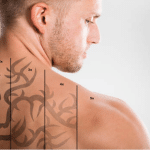
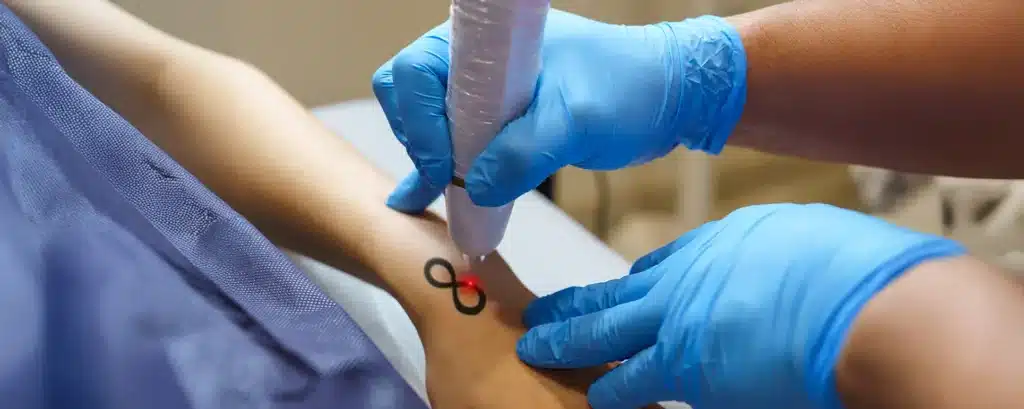
Tattoo regret is incredibly common. Whether it is an old flame’s name, a design that no longer fits your aesthetic, or a piece of ink that didn’t quite turn out as planned, living with unwanted body art can feel like carrying around permanent baggage. Fortunately, advanced medical technology has made laser tattoo removal highly reliable. However, the traditional process is notoriously slow. A conventional tattoo removal journey frequently stretches over a year or two, requiring multiple spaced-out appointments that test your patience.
The primary bottleneck is a natural skin reaction called epidermal whitening commonly known in the industry as “frosting” which prevents laser technicians from making multiple passes over your ink in a single office visit. Enter the DESCRIBE® PFD Patch. This cutting-edge clinical accessory is redefining the mechanics of ink clearing, allowing providers to safely speed up the removal timeline. But what exactly is this patch, how does it interact with medical lasers, and does it genuinely make your tattoo fade faster? Let’s dive deep into the clinical science, practical benefits, and real-world expectations of the PFD patch.
The Science of Ink: How Laser Tattoo Removal Works
To understand why the PFD patch is a game-changer, it helps to look at how conventional laser tattoo removal breaks down pigment. When you get a tattoo, the needle injects large ink particles deep into your skin’s second layer, the dermis. Because these ink particles are significantly larger than your local white blood cells, your body’s immune system cannot consume or carry them away. This structural size is what makes a tattoo permanent.
Modern advanced lasers such as Q-Switched and high-speed Picosecond lasers deliver ultra-short bursts of light energy directly to the tattoo. The pigment absorbs this intense light energy, causing it to vibrate violently and shatter into micro-particles via a process called photothermal and photoacoustic disruption. Once the ink is broken down into these microscopic fragments, your body’s lymphatic system (the network that clears cellular waste) can finally step in, gather the tiny shards, and filter them out through your liver and kidneys over the following weeks.
The Big Bottleneck: Understanding “Frosting”
In a traditional laser removal session, a technician can only treat your tattoo with a single pass of the laser per visit. If they try to fire the laser a second time immediately afterward, it won’t do anything to the ink and it could cause severe damage to your skin. Why? The answer lies in epidermal whitening, or frosting.
When the high-intensity laser light collides with tattoo pigment, the extreme, localized heat creates tiny steam bubbles and gas carbon dioxide byproducts within the upper layers of the skin. Within milliseconds, the surface of your tattoo turns a stark, opaque white, looking very much like a frosted pastry. While frosting is a positive clinical sign that the laser successfully targeted the pigment, this layer of micro-bubbles acts like a highly reflective shield. If a technician tries to apply another laser pulse over a frosted area, the light cannot penetrate the gas bubbles to reach the deeper ink. Instead, the laser energy bounces off or gets trapped in the upper epidermis, risking severe heat injuries, blistering, and permanent scarring.
In standard treatments, this frosting takes anywhere from 20 to 30 minutes to naturally subside as the gas dissolves back into the surrounding tissue. Because most medical clinics cannot have patients sit in a treatment chair for hours to wait out the frosting between individual passes, you are limited to one pass per session, forced to wait 6 to 8 weeks for your skin to heal before you can return for your next single pass.
What Exactly is the PFD Patch?
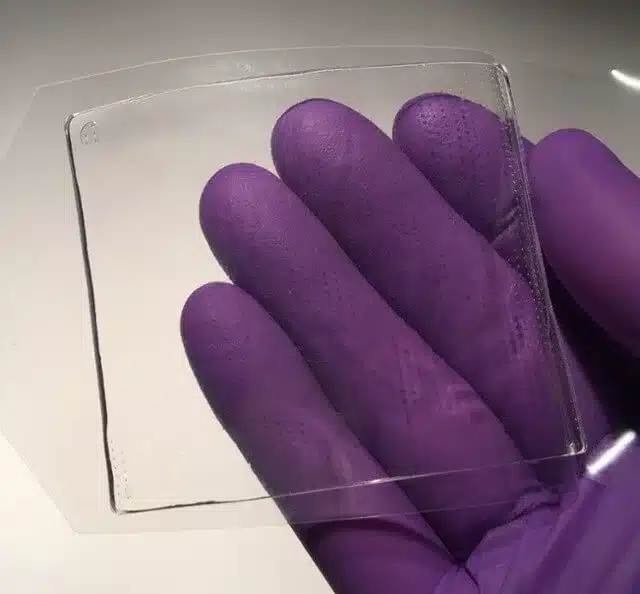
The PFD Patch is a single-use, transparent accessory that completely bypasses this waiting period. Developed by medical scientists, it consists of a flexible, medical-grade silicone patch infused with a clear liquid called Perfluorodecalin (PFD). PFD is a completely inert, non-toxic, and biocompatible liquid compound that has been safely used in various medical procedures including eye surgeries and liquid respiration therapies for decades. It possesses unique chemical and optical qualities that make it an exceptional “optical clearing agent.”
When applied directly over an active tattoo, the PFD liquid quickly fills the microscopic voids, pores, and cellular gaps within the skin tissue. Because the PFD patch features a transmission rate greater than 99%, it allows specialized dermatological laser light to pass through completely unimpeded, maintaining maximum target energy without scattering or weakening the beam.
How the PFD Patch Works to Accelerate Removal
The magic of the PFD patch happens the moment the laser strikes the skin. Instead of waiting 30 minutes for the gas micro-bubbles to dissipate on their own, the perfluorodecalin liquid absorbs and dissolves those carbon dioxide bubbles almost instantly. The white frosting effect disappears within seconds rather than half an hour.
By rapidly eliminating the reflective gas barrier, the PFD patch allows your laser technician to safely perform up to four laser passes in a single treatment session. Beyond clearing the road for multiple passes, the PFD patch serves as a powerful protective barrier. The combination of the specialized liquid and the silicone backing conducts intense heat away from your outer skin layer (the epidermis), reducing the local temperature significantly. This thermal protection shields your skin cells from excessive heat damage, making the experience far more stable and controlled.
The Step-by-Step PFD Patch Treatment Process
Experiencing a tattoo removal session with a PFD patch is smooth and straightforward. The clinical workflow is designed to maximize safety while ensuring the liquid remains fully active during the laser passes.
1.Skin Preparation and Cleansing: Pre-treatment.
Traditional vs. PFD Patch Tattoo Removal: A Direct Comparison
To see exactly how much of a difference this innovative patch makes, let’s look at how it stacks up against conventional single-pass removal treatments across key metrics.
| Feature / Metric | Traditional Laser Tattoo Removal | PFD Patch Laser Tattoo Removal |
| Laser Passes Per Visit | Strictly 1 pass per session | Up to 4 passes in a single session |
| Ink Clearing Speed | Slow; ink is targeted layer by layer over many months | Significantly accelerated; targets multiple depths per visit |
| Epidermal Frosting | Lasts 20 to 30 minutes; halts treatment | Dissolves almost instantly; allows immediate re-treatment |
| Skin Heat Protection | Minimal natural cooling; higher risk of epidermal blistering | Advanced protection; silicone and PFD conduct heat away from the skin |
| Reported Discomfort | High heat sensation and post-session tenderness | Noticeably reduced pain and swelling reported by patients |
| Average Weeks Between Visits | 6 to 8 weeks | 6 to 8 weeks (but with quadruple the progress per visit) |
Does It Actually Work Faster? What the Clinical Data Says
The short answer is yes, it works significantly faster in terms of clearing ink per office visit.
In rigorous clinical trials published in peer-reviewed medical journals like Lasers in Surgery and Medicine, researchers demonstrated that using a PFD-infused patch allowed providers to make nearly three to four times more laser passes within a compact treatment window compared to standard open-air treatments. When you can pack up to four passes into a single appointment, you are essentially compressing multiple months of traditional, single-pass progress into one day. For patients, this translates to:
-
Faster Visible Fading: Because the laser can target deep-seated ink layers during passes two, three, and four layers that a single traditional pass could never reach the tattoo breaks down and fades with far greater efficiency.
-
Fewer Overall Office Visits: While every single body is unique, many patients utilizing the PFD patch require fewer total clinic appointments to achieve complete clearance, saving considerable time over the lifespan of their removal journey.
-
Optimized Healing Environments: Because the silicone patch shields the surrounding tissue from unnecessary epidermal injury, the skin heals with fewer complications, such as extreme scabbing or severe blistering, allowing you to stay tightly on track with your removal schedule.
Candid Realities: Who is the Ideal Candidate?
While the DESCRIBE® PFD Patch is a revolutionary option, it is important to maintain realistic expectations. The patch is an exceptional medical tool, but it behaves as an accessory to the laser it does not change how your body’s immune system removes the shattered ink.
The Ideal Candidate
The patch is heavily optimized and cleared for individuals with Fitzpatrick Skin Types I–III (typically fairer to light olive skin complexions) when paired with standard Q-Switched or Picosecond lasers. It is highly effective for:
- Large tattoos where single-pass timelines would take years.
- Stubborn, older tattoos with deep, dense ink layers.
- Individuals with busy schedules who want to minimize their trips to the clinic.
Important Caveats
If you have a darker skin tone (Fitzpatrick Types IV–VI), laser settings must already be carefully moderated to protect your natural melanin from hyperpigmentation or hypopigmentation (darkening or lightening of the skin). In these instances, a licensed provider must evaluate your skin on an individual basis to determine if multi-pass treatments are appropriate for your specific skin profile. Additionally, the patch cannot be applied over open wounds, active skin infections, or areas with compromised skin integrity.
Side Effects and Safety Profile
One of the most reassuring aspects of the PFD patch is its safety profile. Clinical data shows that using the patch does not introduce any new or unique side effects beyond what is already normally associated with standard laser tattoo removal. Normal, expected temporary side effects include:
- Mild to moderate redness (erythema)
- Localized swelling (edema)
- Temporary skin tenderness or a sunburnt sensation
- Minor crusting or shedding during the first week of recovery
In fact, because the patch actively pulls heat away from the epidermis, most patients explicitly report less post-treatment redness, minimized swelling, and a more comfortable healing window compared to sessions completed without the patch. Furthermore, because the physical silicone sheet covers the treatment area, it acts as a protective shield for both the patient and the clinician against airborne debris and minor skin splatters that occasionally occur during high-energy laser pulses.
Why Choose Winter Park Tattoo Removal for Your Journey?
At Winter Park Tattoo Removal, we understand that parting ways with unwanted ink is a deeply personal, physical, and emotional process. We don’t believe in cutting corners or making you endure a unnecessarily prolonged removal timeline. That is why we stay at the absolute forefront of dermatological science, offering premium clinical innovations like the DESCRIBE® PFD Patch to our clients. Our highly trained, certified laser specialists customize every single removal protocol to align with your specific skin type, the age of your tattoo, and the exact chemical makeup of your ink. By pairing top-tier, medical-grade laser technology with advanced protective accessories like the PFD patch, we provide a removal experience that is:
- Faster: Helping you achieve your clearance goals in fewer visits.
- Savers: Shielding your delicate skin from unnecessary thermal damage.
- More Comfortable: Minimizing treatment discomfort and accelerating your post-session healing.
Stop letting an unwanted tattoo dictate how you feel about your skin. Let us help you hit the reset button efficiently.