
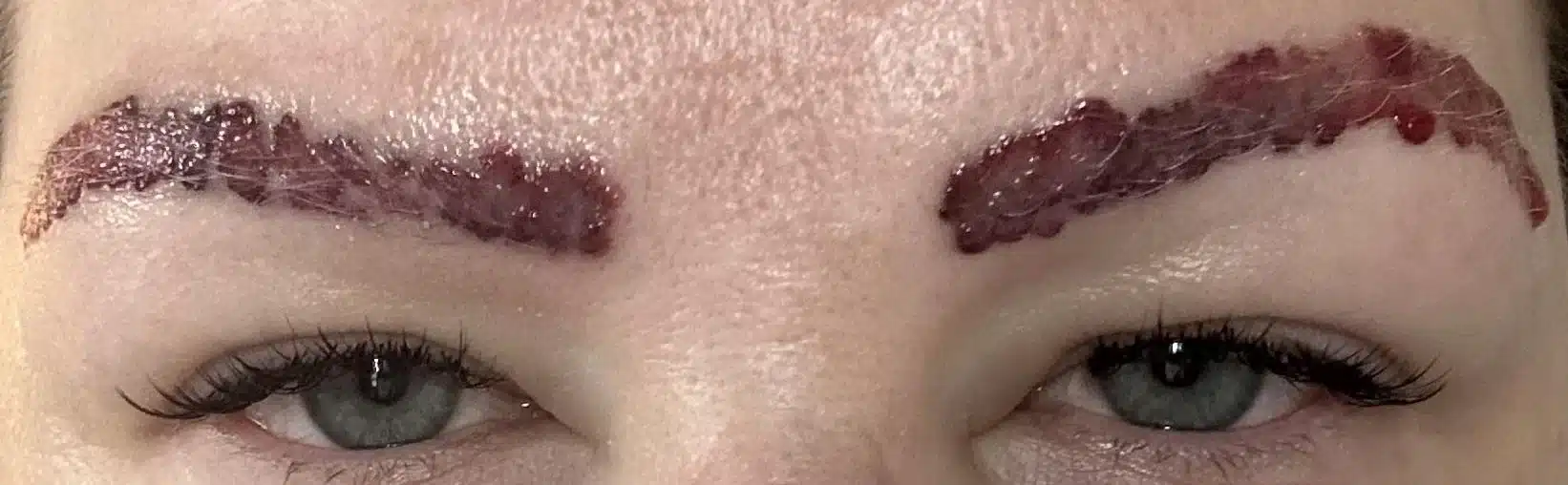
Bad microblading can quickly shift from a confidence-boosting beauty enhancement into a daily source of frustration. Whether your brows healed too dark, became uneven, shifted into unnatural orange or blue tones, or simply no longer flatter your evolving facial structure, the reality is that you are not stuck with the results. Microblading is, at its core, a form of cosmetic tattooing. Like all tattoos, it is subject to the variables of pigment chemistry, technician skill, and skin biology. When those variables don’t align perfectly, the results can be difficult to live with. However, the field of aesthetic medicine has advanced significantly, offering safe, effective ways to fade, correct, or entirely remove unwanted permanent makeup.
At Winter Park Tattoo Removal, we specialize in advanced, science-backed solutions designed to eliminate unwanted pigment while prioritizing the health, texture, and integrity of your skin. This comprehensive guide details exactly how bad microblading can be addressed, the methods available, and what you can realistically expect during your journey back to natural-looking brows.
Understanding Your Options
To help you visualize your path forward, we have compiled a summary of the professional removal techniques we offer:
Why Microblading Doesn’t Always Age Well
To understand the solution, one must understand the problem. Though microblading is often marketed as a “semi-permanent” solution, the pigments are typically deposited into the dermal layer of the skin. Because the body cannot easily break down these foreign particles, they behave much like traditional tattoo ink. Over time, several factors cause brows to degrade, leading clients to seek professional removal:
-
Color Shifting (The “Color Wheel” Effect): As the body breaks down the iron-oxide-based pigments used in most microblading, the lighter-density colors (like yellow or white) fade first, often leaving behind the more stubborn, cooler-toned pigments that appear gray, blue, or violet. Conversely, poor-quality pigments can oxidize, turning a harsh, unnatural red or orange.
-
Pigment Saturation (The “Solid Block”): A common mistake occurs when artists perform too many touch-ups. Over time, the hair-like strokes begin to blur and bleed into one another, creating a solid, muddy-looking block of ink rather than defined, natural-looking hair strokes.
-
Structural Changes: As we age, our skin loses elasticity, and our facial structure changes. A brow shape that looked perfect five years ago may now appear asymmetrical, low-hanging, or mismatched with your current features.
-
Technique Variation: If an artist implants pigment too deeply often called “blowing out” the brow—the ink settles deeper in the dermis, where it is harder for the skin to naturally exfoliate, leading to permanent, stubborn dark patches.
Is Full Removal Actually Possible?
The short answer is yes bad microblading can be significantly corrected or fully removed in the vast majority of cases. However, the path to removal is highly individualized. It depends on several critical factors: the depth of the initial pigment placement, the chemical composition of the ink, the color of the pigment, and your specific skin tone. When you come in for a consultation, we generally aim for one of three potential outcomes:
-
Complete Clearance: The total removal of the pigment, returning the skin to its natural state. This often takes several sessions but is the gold standard for those who want their original brow shape back.
-
Significant Fading: In cases where the pigment is exceptionally stubborn, we aim to lighten the area until it is faint enough to create a “blank canvas”. This allows for a new, professional microblading or powder brow procedure to be performed correctly.
-
Minimal Residual Fading: For older, heavily scarred, or deeply saturated ink, we work to reduce the density until the pigment is visually minimal and easily hidden with standard makeup, removing the “heavy” look that causes distress.
Advanced Removal Techniques at Winter Park Tattoo Removal
There is no “one-size-fits-all” solution. We determine the best path forward based on a rigorous analysis of your skin and the ink currently residing in it.
1. Laser-Based Pigment Removal (The Gold Standard)
Laser technology is the most advanced, precise, and effective method for breaking down cosmetic tattoos.
-
How it works: We utilize specialized medical-grade lasers that emit rapid pulses of light energy. This energy is absorbed by the pigment particles, which are then shattered into tiny, microscopic fragments. Once broken down, your body’s natural immune system (specifically white blood cells) recognizes these fragments as waste and flushes them away through the lymphatic system.
-
Advantages: It is highly targeted, meaning it leaves the surrounding skin largely untouched. It is also the most efficient way to achieve deep-tissue pigment breakdown.
2. Saline Solution Removal
For those who prefer a non-laser approach or who have newer, superficial work, saline removal is a highly effective alternative.
-
How it works: This is a chemical-based, non-laser method. A sterile, hypertonic saline solution is implanted into the skin using a cosmetic tattoo device. The high concentration of salt creates an osmotic effect, pulling the pigment up toward the surface of the skin. As the area forms a light scab during the healing process, the pigment is lifted out of the skin along with the scab.
3. Customized Combination Protocols
Rarely is a single session enough. Often, the best results come from a hybrid approach. We may start with a laser session to break down deep ink, follow up with a saline session to lift residual surface pigment, and incorporate medical-grade skincare to accelerate skin turnover.
The Reality of the Timeline
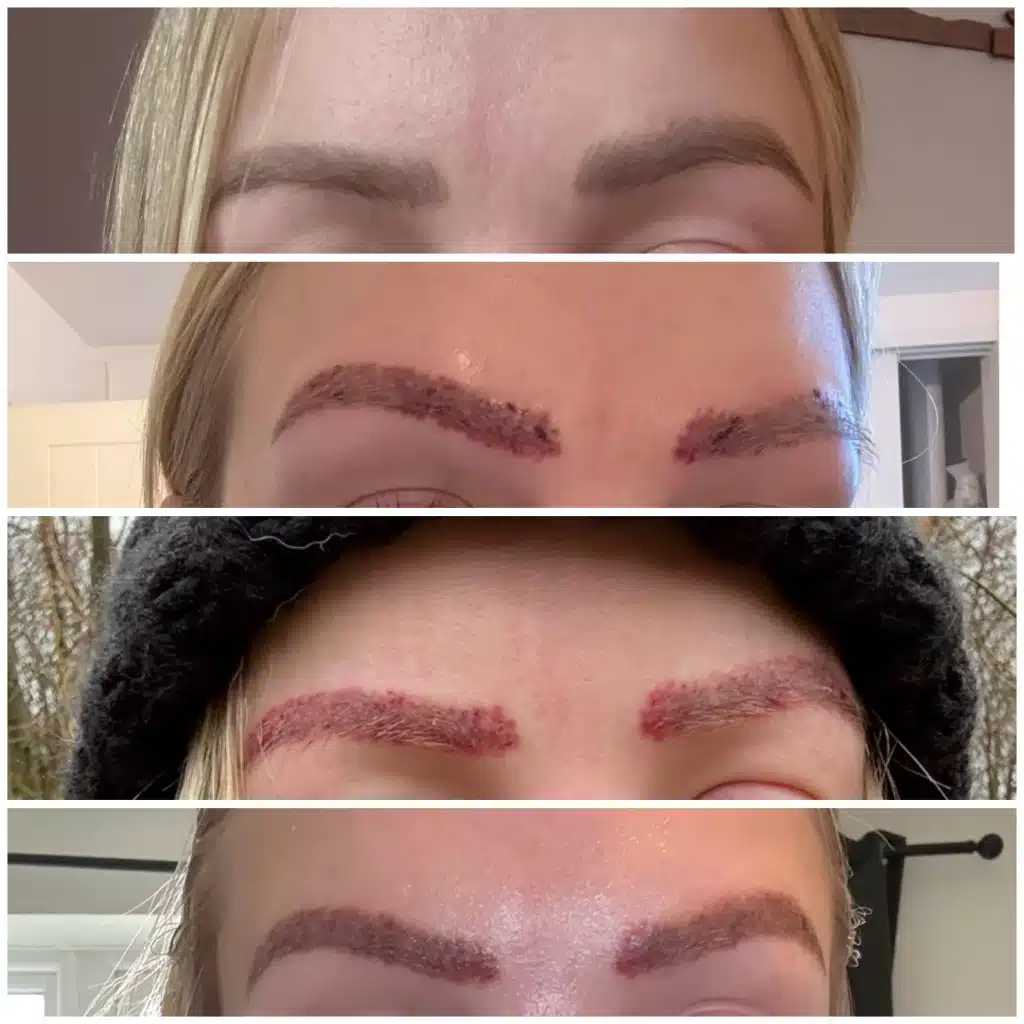
Patience is the most important ingredient in your removal journey. Because the skin heals in cycles and the body needs time to process the broken-down ink, the timeline for total clearance is a marathon, not a sprint.
-
The Treatment Plan: Most clients require anywhere from 3 to 10 sessions to achieve their desired results.
-
Healing Intervals: We strictly enforce a 6–8 week healing interval between sessions. Even if your skin looks “healed” on the surface within a week, the underlying tissue needs the full window to finish processing the pigment particles.
Why Winter Park Tattoo Removal Is Your Trusted Partner
Bad microblading is more than just a cosmetic concern it affects your self-esteem and your daily routine. You deserve a professional environment that understands both the artistry of brows and the science of skin. At Winter Park Tattoo Removal, our approach is built on three pillars:
-
Pigment Expertise: Cosmetic pigments (often iron-oxide based) react differently to lasers than the carbon-based inks used in traditional body tattoos. We use specialized laser settings tailored specifically for these unique chemical compositions.
-
Integrity-First Philosophy: We don’t just want to remove your ink; we want to ensure the skin underneath remains healthy and vibrant.
-
Transparent Guidance: We walk you through exactly what can be achieved, how many sessions it will likely take, and the realistic outcomes you can expect for your specific case.
Take the Next Step Toward Your Natural Look
You do not have to live with a cosmetic result that doesn’t feel like “you”. Modern aesthetic technology has made it easier than ever to turn back the clock on bad microblading and restore your natural, confident appearance. Ready to reclaim your brows?
Contact Winter Park Tattoo Removal today to schedule your comprehensive, professional assessment and build your personalized removal plan.


