
PFD Patch Laser Tattoo Removal
PFD Patch Tattoo Removal: Advanced Technology for Faster Results
Tattoos are often meaningful expressions of identity, memories, or artistic creativity. However, as life evolves, so do personal preferences. Many individuals eventually decide that a tattoo no longer represents who they are. Whether it’s for professional reasons, personal change, or dissatisfaction with the original design, tattoo removal has become increasingly popular.
Thanks to major advancements in dermatologic technology, removing unwanted tattoos is now safer and more efficient than ever. One of the most innovative developments in the field is PFD Patch Laser Tattoo Removal, a cutting-edge technique designed to improve the speed and effectiveness of traditional laser treatments.
At Winter Park Tattoo Removal, we specialize in advanced tattoo removal solutions that deliver reliable results with patient comfort and safety as top priorities. The PFD Patch technology represents one of the most exciting breakthroughs in modern laser tattoo removal, allowing multiple laser passes in a single session and helping accelerate the fading process.
In this guide, we will explore how PFD Patch laser tattoo removal works, its advantages over conventional methods, and why it is becoming one of the most sought-after tattoo removal technologies today.
Contact Us Today!

What Is PFD Patch Laser Tattoo Removal?
PFD Patch Laser Tattoo Removal is an advanced technique that incorporates a specialized perfluorodecalin-infused silicone patch during laser tattoo removal treatments. This transparent patch is applied directly over the tattooed skin during the procedure. The key function of the patch is to enhance laser penetration and allow multiple passes of the laser in a single treatment session.
During traditional laser tattoo removal, only one pass of the laser is typically performed per session. This limitation occurs because the skin develops a temporary whitening effect known as laser frosting, which blocks additional laser energy from reaching the tattoo ink. The PFD patch eliminates this limitation by absorbing the gas bubbles responsible for the whitening effect. As a result, the skin quickly clears and becomes receptive to additional laser passes.
This means practitioners can perform three to four laser passes during a single treatment session, significantly improving treatment efficiency and accelerating tattoo fading.
Why More People Are Choosing Tattoo Removal Today
Tattoos were once considered permanent body art. Today, however, many people choose to remove tattoos for a variety of personal and professional reasons. Some of the most common motivations include:
- Career changes that require a more professional appearance
- Outdated designs that no longer match personal style
- Names or symbols from past relationships
- Poor-quality tattoos or faded artwork
- Desire to replace old tattoos with new designs
Advancements in cosmetic laser technology have made it possible to remove or significantly fade tattoos without the risks associated with older removal techniques. As a result, laser tattoo removal has become one of the most requested aesthetic procedures worldwide.
The Science Behind Laser Tattoo Removal
Laser tattoo removal works by using concentrated light energy to break down tattoo pigments embedded deep within the skin. The laser targets the ink particles without significantly affecting the surrounding tissue. When the laser pulses hit the tattoo pigment, the ink absorbs the energy and shatters into microscopic fragments. Once the ink particles become smaller, the body’s immune system gradually removes them through natural metabolic processes.
Over several treatment sessions, the tattoo becomes progressively lighter until it fades significantly or disappears completely. This scientific approach allows professionals to safely remove tattoos while preserving the surrounding skin.
The Science Behind PFD Patch Technology
To understand why the PFD patch is such a breakthrough, it helps to understand how laser tattoo removal works at a scientific level.
Laser tattoo removal uses high-energy pulses of light to target pigment particles embedded within the skin. These laser pulses fragment the ink into tiny particles that the body’s immune system gradually eliminates through the lymphatic system.
Why the PFD Patch Makes Multiple Laser Passes Possible
When the laser interacts with tattoo ink, it creates tiny gas bubbles in the skin that cause the temporary whitening effect known as frosting. This frosting prevents the laser from penetrating the skin effectively during subsequent passes.
The perfluorodecalin (PFD) patch works by absorbing these gas bubbles, allowing the frosting to dissipate almost instantly. This process, known as optical clearing, restores skin transparency and allows additional laser energy to reach the pigment.
Because of this unique capability, the PFD patch enables practitioners to deliver multiple laser passes in one session without compromising safety.

How the PFD Patch Tattoo Removal Procedure Works
At Winter Park Tattoo Removal, the PFD patch treatment process is carefully designed to ensure optimal results and patient comfort.
1: Initial Consultation
Every tattoo removal journey begins with a comprehensive consultation. During this appointment, our specialists evaluate several important factors, including:
- The size and location of the tattoo
- Ink colors and density
- Skin type and tone
- The age of the tattoo
- Previous tattoo treatments
2: Preparing the Skin
Before the laser procedure begins, the treatment area is thoroughly cleansed. Protective eyewear is provided, and in some cases, a topical numbing agent may be applied to minimize discomfort during the procedure.

What Types of Tattoos Can Be Removed?
Laser tattoo removal technology has advanced significantly and can now treat a wide range of tattoos. Common tattoos treated include:
- Professional tattoos
- Amateur tattoos
- Cosmetic tattoos
- Multicolored tattoos
- Cover-up tattoos
- Older faded tattoos
The Tattoo Removal Treatment Journey
Understanding the tattoo removal process helps patients feel more prepared and confident before starting treatment.
- Personalized Consultation: Every treatment begins with a consultation where specialists assess the tattoo, skin type, ink colors, and overall health of the skin.
- Laser Treatment Sessions: During the procedure, controlled laser pulses are delivered to the tattoo area to break apart the ink particles embedded in the skin.
- Healing and Ink Breakdown: After treatment, the body’s natural processes gradually remove the broken ink fragments over several weeks.
- Follow-Up Treatments: Multiple sessions are required because tattoo ink is layered deep in the skin. Each session gradually fades the tattoo until the desired result is achieved.

3: First Laser Pass
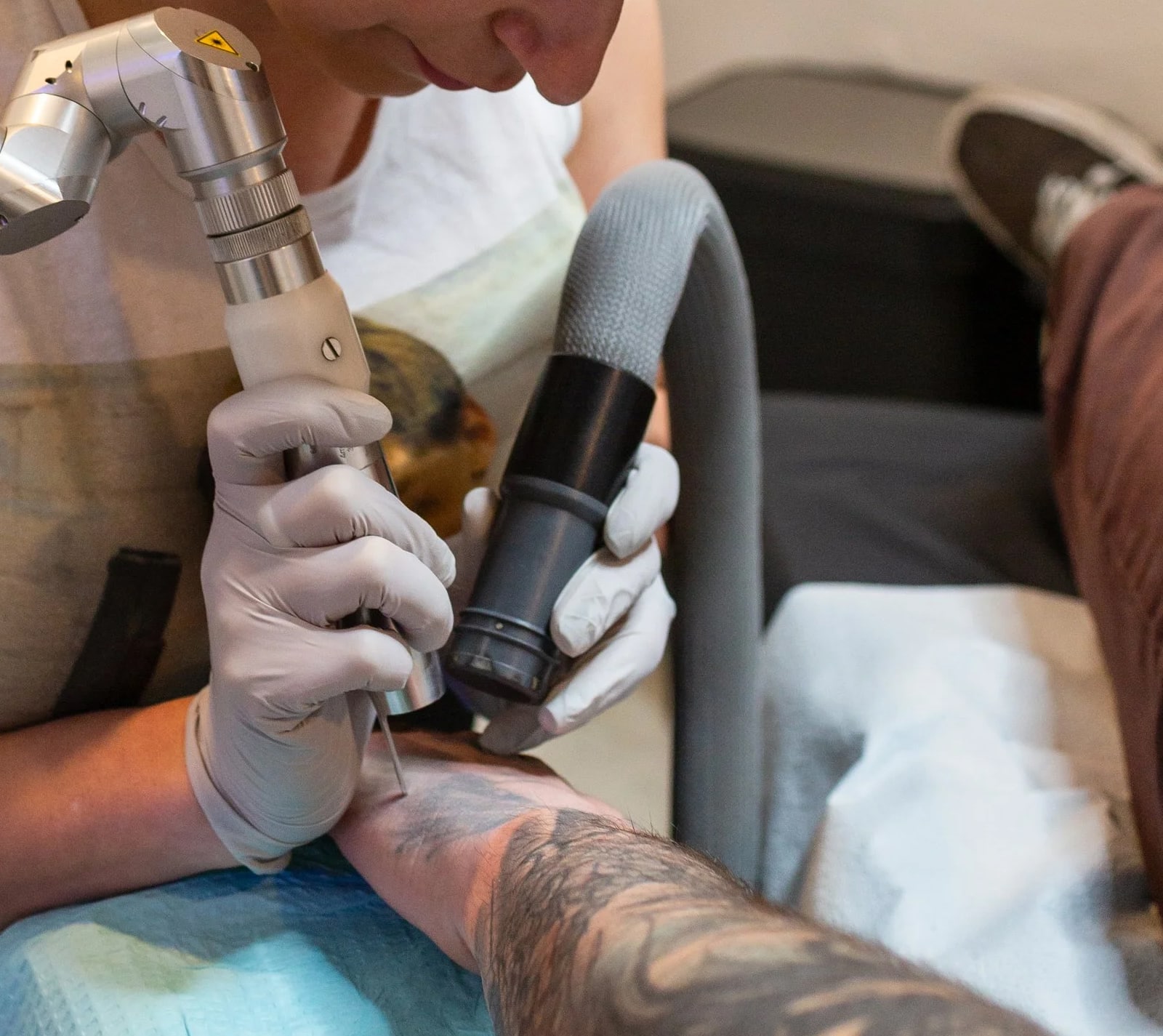
A medical-grade laser is used to deliver precise pulses of energy to the tattoo pigment. These pulses shatter the ink particles into microscopic fragments that can be gradually eliminated by the body’s immune system.
4: Application of the PFD Patch
After the first laser pass, the PFD patch is placed over the tattooed area. The patch immediately absorbs the gas bubbles that cause the whitening effect.
This allows the practitioner to perform additional laser passes without waiting for the frosting to disappear naturally.
Depending on the tattoo and skin response, up to three or four passes may be completed during the same appointment.
5: Post-Treatment Care
After treatment, the skin may appear slightly red or swollen, similar to a mild sunburn. These reactions are normal and typically subside within a few days.
Patients receive detailed aftercare instructions to support proper healing and maximize treatment effectiveness.
Factors That Affect Tattoo Removal Results
The success and speed of tattoo removal can vary depending on several factors.
- Tattoo Color: Black ink typically responds the fastest to laser treatments because it absorbs laser energy effectively. Brighter colors may require additional sessions.
- Tattoo Age: Older tattoos often fade more easily because the ink has already begun to break down naturally.
- Ink Density: Professional tattoos usually contain more ink and may require additional treatments.
- Skin Tone: Skin type and pigmentation can influence how the laser interacts with the tattoo.
- Tattoo Location: Tattoos located closer to the heart tend to fade faster because circulation helps remove fragmented ink particles.
Which Tattoos Respond Best to PFD Patch Treatments?
Tattoo removal success depends on a variety of factors, including ink color, depth, and tattoo age. The PFD patch technology can be effective for many tattoo types, including:
- Black Ink Tattoos: Black pigment absorbs laser energy most effectively, making it one of the easiest colors to remove.
- Dark Blue and Dark Green Tattoos: These pigments also tend to respond well to modern laser technologies.
- Older Tattoos: Older tattoos often fade more quickly because the body has already begun breaking down some of the pigment naturally.
- Professional Tattoos: Although professional tattoos typically contain deeper ink, advanced laser techniques such as PFD patch treatments can still effectively target these pigments.

Which Tattoos Respond Best to PFD Patch Treatments?
Tattoo removal success depends on a variety of factors, including ink color, depth, and tattoo age. The PFD patch technology can be effective for many tattoo types, including:
- Black Ink Tattoos: Black pigment absorbs laser energy most effectively, making it one of the easiest colors to remove.
- Dark Blue and Dark Green Tattoos: These pigments also tend to respond well to modern laser technologies.
- Older Tattoos: Older tattoos often fade more quickly because the body has already begun breaking down some of the pigment naturally.
- Professional Tattoos: Although professional tattoos typically contain deeper ink, advanced laser techniques such as PFD patch treatments can still effectively target these pigments.

How Many Sessions Are Required?
Tattoo removal is a gradual process that requires patience. Even with advanced technology like the PFD patch, the body needs time to flush out broken ink particles.
Most patients require six to ten treatment sessions, spaced approximately four to six weeks apart. The exact number of sessions depends on several factors, including:
- Tattoo size and complexity
- Ink color and depth
- Skin type
- The body’s immune response
During your consultation at Winter Park Tattoo Removal, we will provide a realistic timeline based on your specific tattoo.
Is PFD Patch Tattoo Removal Safe?
- Redness
- Minor swelling
- Skin sensitivity
- Occasional blistering
Why Choose Winter Park Tattoo Removal?
When it comes to tattoo removal, experience and technology make all the difference. At Winter Park Tattoo Removal, our clinic is committed to providing patients with the most advanced and effective tattoo removal solutions available. Our approach focuses on:
1: Advanced Laser Technology
We utilize state-of-the-art laser systems and modern techniques such as PFD patch technology to improve treatment outcomes.
2: Experienced Specialists
Our trained professionals understand the complexities of laser tattoo removal and tailor every treatment to the individual patient.
3: Personalized Care
Every tattoo and every patient is different. We design customized treatment plans that align with your skin type, tattoo characteristics, and removal goals.
5: Patient Safety and Comfort
Your safety and comfort remain our top priorities throughout every stage of the treatment process.

Why Choose Winter Park Tattoo Removal?
When it comes to tattoo removal, experience and technology make all the difference. At Winter Park Tattoo Removal, our clinic is committed to providing patients with the most advanced and effective tattoo removal solutions available. Our approach focuses on:
1: Advanced Laser Technology
We utilize state-of-the-art laser systems and modern techniques such as PFD patch technology to improve treatment outcomes.
2: Experienced Specialists
Our trained professionals understand the complexities of laser tattoo removal and tailor every treatment to the individual patient.
3: Personalized Care
Every tattoo and every patient is different. We design customized treatment plans that align with your skin type, tattoo characteristics, and removal goals.
5: Patient Safety and Comfort
Your safety and comfort remain our top priorities throughout every stage of the treatment process.
Trusted by Patients Across Winter Park
At Winter Park Tattoo Removal, patient satisfaction and transparency are extremely important to us. We maintain an active Winter Park Tattoo Removal profile on Google My Business, where prospective patients can explore authentic feedback from individuals who have experienced our treatments firsthand.
We encourage you to visit our listing to read verified patient reviews, view real client experiences, and learn more about the quality of care we provide.
Our strong reputation and positive ratings reflect our commitment to delivering safe, effective, and results-driven tattoo removal treatments for every patient who walks through our doors.
Frequently Asked Questions
1. Why isn’t my tattoo fading fast with regular lasers?
Traditional lasers allow only one pass per session due to skin whitening. The PFD patch enables multiple passes, helping your tattoo fade faster.
2. Will PFD Patch work on stubborn or older tattoos?
Yes. The patch improves laser penetration, making it effective on older, dark, or professional tattoos that are resistant to conventional removal.
3. Is the treatment safe for sensitive skin?
Absolutely. The patch protects the skin, reduces irritation, and allows safe multi-pass treatment even on sensitive areas.
4. Can I shorten the total number of sessions?
Often yes. Multiple passes per session accelerate pigment breakdown, potentially reducing the total number of appointments needed.
5. How do I avoid side effects after treatment?
Follow post-care instructions carefully keep the area clean, avoid sun exposure, and apply recommended ointments to minimize redness, swelling, or blistering.