
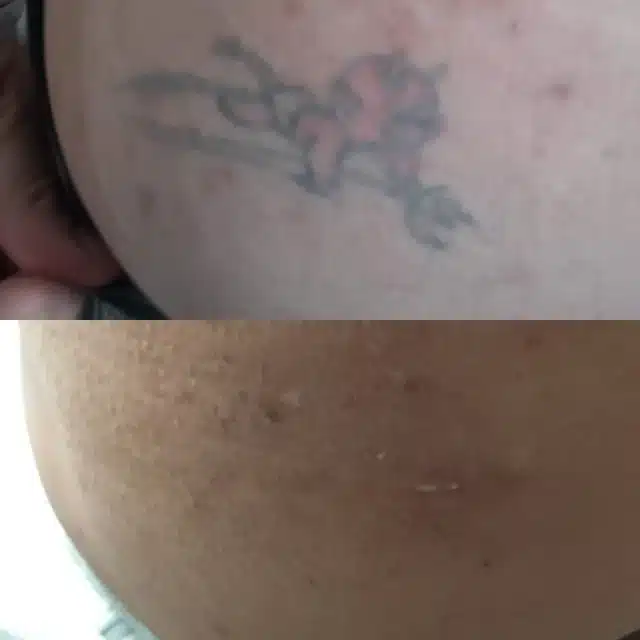
Laser tattoo removal treatments break tattoo ink into tiny particles that your body clears away over the following weeks. Most tattoos need 6 to 12 sessions spaced 6 to 8 weeks apart, so complete removal usually takes about a year or longer. The exact number depends on your ink, skin and the tattoo’s location. Whether you regret a name, an old design or an amateur tattoo, or you want to fade ink for a cover-up, this guide covers what to expect: how the laser works, how many sessions you’ll need, how much it hurts, what it costs and how to get the best results. At Winter Park Tattoo Removal, we provide medically supervised laser tattoo removal for clients in Winter Park, Orlando and across Central Florida, starting with a free consultation.
Key takeaways
- The laser shatters ink into tiny fragments, and your body’s natural cleanup system removes them gradually.
- Most tattoos need 6–12 sessions. Amateur tattoos often need fewer, and dense or multicolored tattoos may need more.
- Sessions are spaced about 6–8 weeks apart so your skin can heal and your body can clear the ink.
- Treatment feels like a rubber band snapping against the skin, and numbing options make it much more comfortable.
- Black ink is the easiest to remove. Green, blue and light colors take more work.
- Starting in the cooler months is ideal in Florida, because tanned or sunburned skin can’t be safely treated.
How Do Laser Tattoo Removal Treatments Work?
Tattoo ink sits in the dermis, the layer of skin below the surface. The particles are too large for your body to remove on its own, which is why tattoos are permanent. A tattoo removal laser sends extremely short pulses of light into the skin. The ink absorbs that energy and breaks into much smaller fragments. Your immune system’s cleanup cells (macrophages) then carry those fragments away through the lymphatic system. That’s why the tattoo fades gradually between sessions rather than disappearing on the spot. Most of the fading happens in the weeks after each treatment. Different ink colors absorb different wavelengths of light. Dark inks respond well to one wavelength and reds and oranges to another, so your technician matches the laser settings to the colors in your tattoo.
How Many Laser Tattoo Removal Sessions Will You Need?
Every tattoo is different, but these factors have the biggest effect on your session count:
| Factor | Fewer sessions | More sessions |
| Ink color | Black, dark gray | Green, light blue, yellow, white |
| Ink amount | Amateur or thin linework | Dense, professional, heavily shaded |
| Tattoo age | Older, already faded | Newer, saturated |
| Location | Upper body, closer to the heart | Hands, ankles, feet (lower circulation) |
| Layering | Single tattoo | Cover-ups or reworked tattoos |
| Health | Non-smoker, good circulation | Smoker, slower healing |
Typical ranges (estimates only):
- Amateur or homemade tattoos: often 4–8 sessions
- Professional black tattoos: often 6–12 sessions
- Multicolored or cover-up tattoos: 10 or more sessions
During your free consultation, your technician looks at your tattoo and skin type and gives you a personalized estimate.
Why Are Sessions Spaced 6–8 Weeks Apart?
Your body needs time to clear the shattered ink and fully heal the skin between treatments. Treating too soon doesn’t speed things up. It raises the risk of blistering, pigment changes and scarring without improving results. Waiting the recommended time gives you the best fading per session and keeps your skin healthy.
Laser Tattoo Removal Timeline: Why Now Is the Best Time to Start
If you want to see a big difference by summer, the best time to start is fall or winter.
- Florida sun matters. Tanned or sunburned skin can’t be safely treated, and treated skin must be kept out of the sun while it heals. The cooler months make that much easier.
- Session spacing adds up. At 6–8 weeks between sessions, starting in winter gives you time for three or more treatments before summer, which is usually enough for noticeable fading.
- Covering up is easier. Long sleeves and pants make it simple to protect treated areas while they heal.
To be clear, most tattoos won’t be completely gone in one season. But starting now puts you much further along by the time beach season arrives.
Does Laser Tattoo Removal Hurt?
Most clients describe it as a rubber band snapping against the skin or a quick sting from hot grease. The good news is that each pass is fast. A small tattoo can take just a few minutes. We offer several ways to make treatment more comfortable:
- BLT numbing cream applied before your session
- Lidocaine tattoo removal for clients who want deeper numbing
- Cooling during and after treatment
Most clients find it very manageable with numbing, and much easier than they expected.
What Happens During a Laser Tattoo Removal Session?
- Free consultation. We assess your tattoo, skin type and goals, answer your questions and build a custom treatment plan.
- Preparation. The area is cleaned, and numbing is applied if you’ve chosen it. You and your technician wear protective eyewear.
- Laser treatment. The technician passes the laser over the tattoo. The skin often turns white briefly (“frosting”), which is a normal reaction.
- PFD patch (if used). A PFD patch can reduce frosting quickly, which may allow more than one laser pass in a single visit.
- Aftercare dressing. The area is cooled, covered and bandaged, and you go home with aftercare instructions.
Laser Tattoo Removal Aftercare Tips
Good aftercare helps you heal faster and get better results:
- Keep the area clean, dry and covered for the first few days.
- Apply the ointment your technician recommends.
- Don’t pick at blisters or scabs. Let them heal on their own.
- Avoid swimming pools, hot tubs and soaking baths until the skin heals.
- Keep the area out of the sun, and use SPF 30+ once it’s healed.
- Stay hydrated, stay active and avoid smoking, which all support your body’s ability to clear ink.
Are There Side Effects?
Laser tattoo removal is a well-established procedure when it’s performed by trained professionals. Common, temporary reactions include:
- Redness, swelling and tenderness
- Frosting (temporary whitening right after treatment)
- Blisters or scabbing that heal within a week or two
Less common effects include temporary lightening or darkening of the skin, especially on sun-exposed or darker skin tones. Scarring is rare and is most often linked to picking at the skin or poor aftercare. A customized treatment plan and proper settings help reduce these risks.
How Much Do Laser Tattoo Removal Treatments Cost?
The cost depends mainly on the size of the tattoo and how many sessions it needs. Small tattoos cost less per session than large pieces, and color or density affects the total number of visits. Because every tattoo is different, the most accurate way to get a price is a free consultation, where we give you a clear quote before you commit. We also offer flexible financing so you can spread out the cost.
Full Removal vs. Fading for a Cover-Up
Not everyone wants the tattoo completely gone. If you’re planning a new design over an old one, tattoo fading lightens the existing ink in fewer sessions so your artist has a cleaner canvas. We also offer microblading removal for unwanted brow pigment.
Why Choose Winter Park Tattoo Removal?
- Medically supervised treatments performed by trained, experienced technicians
- Free consultations with an honest assessment and a clear plan, with no pressure
- Customized treatment plans based on your skin type, ink colors, tattoo age and location
- Comfort options including BLT numbing cream and lidocaine
- Advanced add-ons like PFD patches for efficient sessions
- Affordable pricing and financing so treatment fits your budget
- Convenient location in Winter Park, serving Orlando, Maitland, Lake Mary, Kissimmee and nearby communities
Frequently Asked Questions About Laser Tattoo Removal
1: How many sessions does laser tattoo removal take?
Most tattoos need 6 to 12 sessions spaced 6 to 8 weeks apart. Amateur tattoos may need fewer, while dense, colorful or layered tattoos can need more. A consultation gives you a personalized estimate.
2: Can a tattoo be completely removed with a laser?
Many tattoos can be removed completely or faded until they’re barely visible. Results depend on ink color, density, skin type and location. Black ink responds best, while some colors like green and light blue can be harder to clear.
3: Does laser tattoo removal hurt more than getting a tattoo?
Most people say it feels similar to or less painful than getting the tattoo, mainly because it’s much faster. Numbing cream or lidocaine makes treatment more comfortable.
4: How long does it take to see results?
You’ll usually notice fading within 4 to 8 weeks after your first session, as your body clears the broken-down ink. Each session builds on the one before.
5: Can I get laser tattoo removal in the summer?
Yes, but you need to avoid tanning before treatment and keep the treated skin out of the sun while it heals. That’s why many Florida clients prefer to start in the fall or winter.
6: Who should not get laser tattoo removal?
Treatment is usually postponed if you’re pregnant, currently tanned or sunburned, or have an active skin infection in the area. Certain medications and conditions may also affect eligibility, which we review during your consultation.
7: How do I prepare for my first session?
Avoid sun exposure and self-tanners for several weeks, keep the skin clean and moisturized, and let us know about any medications. Wear loose clothing that’s easy to move away from the treatment area.
8: Do you treat scars too?
Yes. Along with tattoo removal, we offer scar laser treatment and acne scar treatment to improve skin texture and appearance.
Book Your Free Laser Tattoo Removal Consultation
The sooner you start, the sooner you’ll see results. Our team will look at your tattoo, answer your questions and build a plan that fits your goals and budget.
Want Winter Park Tattoo Removal's guides and news to show up first when you search Google?